
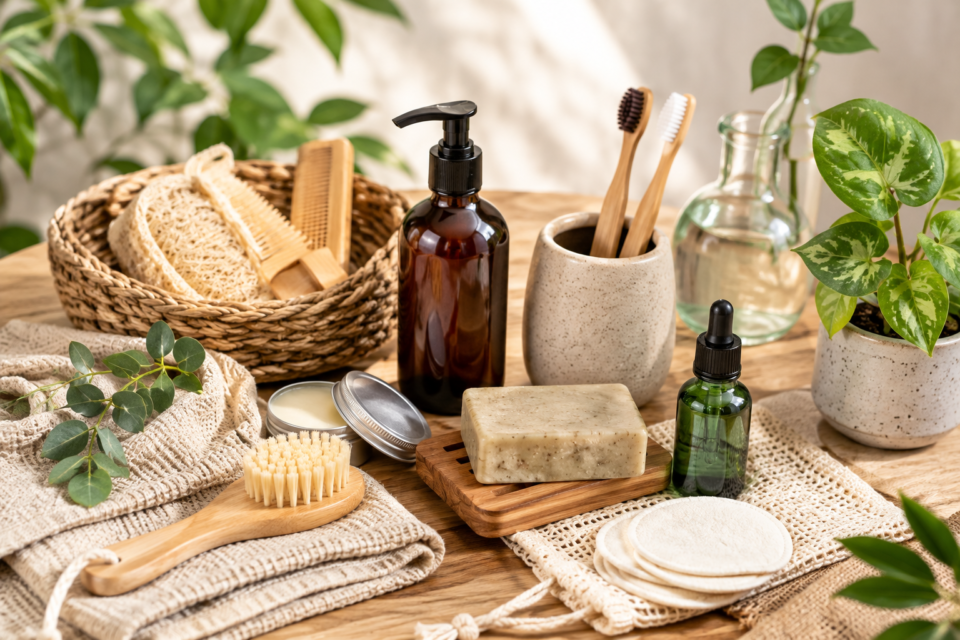
Self-care should make life feel better, not leave you with a bathroom full of half-used products and a growing bin of packaging.
That is where eco-friendly self-care comes in. It is less about finding the “perfect” green product and more about making thoughtful choices that support your wellbeing while reducing unnecessary waste.
A sustainable beauty routine can be surprisingly simple: buy fewer products, use what you have fully, choose reusable or refillable options when practical, and pay attention to how products are packaged and disposed of.
What Is Eco-Friendly Self-Care?
Eco-friendly self-care means looking after your body and wellbeing in ways that also reduce unnecessary environmental impact. In beauty, this can include choosing durable or refillable products, reducing single-use items, avoiding unnecessary purchases, using products efficiently and disposing of packaging responsibly.
It is worth remembering that sustainability is broader than a product being labelled “natural,” “clean” or “green.” A product’s environmental impact can involve its ingredients, manufacturing, water and energy use, packaging, transportation, use and eventual disposal.
The goal isn’t perfection. It is making better choices where they genuinely fit your life.
Start With Less, Not More
One of the simplest sustainable beauty practices is also one of the easiest to overlook: use fewer products.
Beauty marketing can make a complicated routine seem necessary. Cleanser, toner, essence, serum, mask, exfoliant, oil, cream and several specialised treatments can quickly turn into a shelf of products that overlap.
Instead, look at what you actually use.
Before buying something new, ask:
- Do I already own something that serves a similar purpose?
- Will I use this product regularly?
- Can I finish what I already have first?
- Is the packaging unnecessarily complicated?
- Is this something I genuinely need, or simply something that looks appealing?
A smaller routine can be easier to maintain, less expensive and less wasteful.
This is also where the idea of slow beauty becomes useful: self-care becomes less about chasing constant upgrades and more about creating intentional rituals that fit your everyday life.
Choose Reusable and Refillable Options When They Make Sense
Refillable beauty products are becoming increasingly common across skincare, haircare, makeup and fragrance. The basic idea is straightforward: keep a durable container and replace only the product or inner component when it runs out.
When a refill system is genuinely convenient and you repeatedly use it, it can help reduce the amount of packaging discarded over time. Industry and academic discussions increasingly focus on refill and reuse as alternatives to the traditional take-make-waste model.
You can also consider simple reusable alternatives, such as:
- Washable cleansing cloths instead of disposable wipes
- Reusable makeup-removal pads instead of single-use cotton rounds
- A durable razor designed for repeated use
- Refillable soap or body-care dispensers
- Reusable containers for appropriate personal-care products
However, don’t buy a reusable item simply because it is marketed as sustainable. If it sits unused in a drawer, it isn’t helping much. The best reusable product is one you will actually use repeatedly.
Pay Attention to Packaging
Packaging is one of the most visible environmental issues in beauty.
Think about the typical bathroom shelf: bottles, pumps, tubes, jars, caps, boxes, inserts and protective wrapping. Some products contain several layers of packaging before you even reach the formula.
UNEP has highlighted the presence of plastic throughout personal-care products and packaging, including concerns around plastic ingredients and microplastics in cosmetics.
When choosing a new product, look beyond the words “eco-friendly” on the front of the package. Consider whether the packaging is:
- Refillable
- Reusable
- Made partly from recycled material
- Designed with fewer unnecessary components
- Clearly labelled for disposal or recycling
- Appropriate for the recycling systems available where you live
A recyclable package is only useful if the material is actually accepted by local recycling infrastructure. Rules vary considerably between countries and even between local authorities.
Don’t Automatically Choose “Natural”
Natural does not automatically mean sustainable, and synthetic does not automatically mean environmentally harmful.
Ingredients have different environmental footprints depending on how they are sourced, processed, transported and used. Some natural materials may require substantial land or water resources, while some synthetic ingredients can be produced consistently with comparatively efficient processes.
The more useful approach is to look for transparent information rather than relying on a single marketing label.
If a brand makes a sustainability claim, see whether it explains what the claim actually means.
This mindset can also help you avoid greenwashing—the practice of making environmental responsibility appear greater than it really is.
Make Your Shower Routine More Sustainable
Your daily habits matter too.
You don’t have to turn your shower into an environmental audit. A few simple changes can make the routine more mindful:
Use only what you need. More shampoo, cleanser or body wash isn’t necessarily better.
Avoid unnecessary disposable products. Look for reusable alternatives where they are hygienic and practical.
Use products until they’re finished. A sustainable purchase is wasted if most of it ends up unused.
Consider water use. Shortening a shower occasionally, turning the water off while applying a product, or avoiding unnecessarily hot and prolonged showers can reduce water and energy use.
Buy concentrated or solid formats when appropriate. These can sometimes reduce packaging and transportation requirements, although the overall environmental benefit depends on the specific product and its packaging.
Rethink Your Beauty Shopping Habits
Perhaps the most sustainable product is the one you don’t need to buy.
Instead of replacing your entire routine with “eco” versions, transition gradually.
Finish your existing products. When something runs out, investigate alternatives. If a refillable version is affordable and practical, consider it. If not, choose a product with packaging that works with your local disposal system.
This approach also prevents sustainable living from becoming another source of pressure.
You don’t need a perfectly plastic-free bathroom to practise eco-friendly self-care.
Sustainable Self-Care Should Still Feel Like Self-Care
There is a temptation to turn sustainability into another set of rules: never buy this, always choose that, avoid every plastic item, make everything yourself.
That can make self-care feel like work.
A better approach is to create rituals that are both enjoyable and considered. Take time to moisturise after a shower. Use a reusable tool you genuinely like. Keep your routine simple enough that you can maintain it. Choose products because they work for you, rather than because they photograph well on a bathroom shelf.
Sustainable self-care works best when it becomes a habit rather than a challenge.
And remember that beauty products are only one part of wellbeing. Sleep, nourishing food, movement, time outdoors, relationships and mental rest can all be forms of self-care that require very little consumption.
A Simple Eco-Friendly Beauty Routine
If you’re starting from scratch, keep it uncomplicated:
- Audit your current products. Identify what you actually use.
- Finish what you already own. Avoid unnecessary replacement.
- Reduce duplicates. Keep products that serve a genuine purpose.
- Choose reusable or refillable options when they’re practical.
- Check packaging before buying. Look beyond the sustainability claims.
- Use products efficiently. Don’t overuse or waste them.
- Learn your local recycling rules. Disposal systems differ around the world.
- Make gradual changes. Sustainable habits are easier to maintain when they fit your life.
- The most meaningful change isn’t creating a picture-perfect “zero-waste” bathroom. It’s building a beauty routine that takes care of you without encouraging unnecessary consumption.