
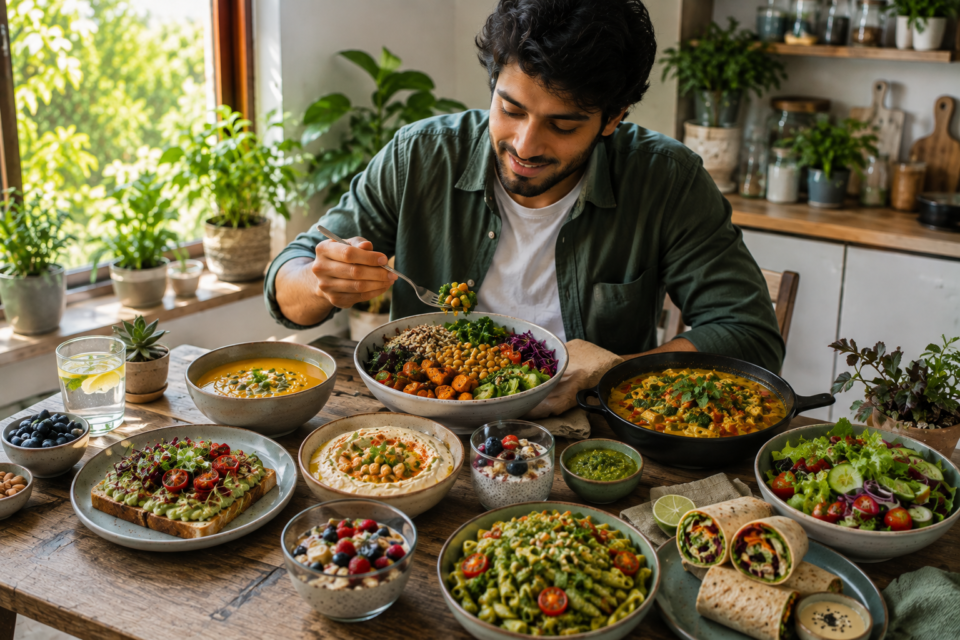
Knowing what to eat is often easier than figuring out how to make healthy eating work on a busy Tuesday. A vegetarian meal can be as simple as dal and rice, a colourful grain bowl, or a vegetable-filled wrap. You don’t need every meal to be perfect. What matters more is finding a way of eating that feels nourishing, enjoyable and realistic enough to stick with.
A plant-powered vegetarian lifestyle is less about restriction and more about variety. Vegetables, fruits, beans, lentils, whole grains, nuts, seeds and other plant foods can form the foundation of everyday meals, while foods such as dairy, eggs or other vegetarian protein sources can fit in according to individual preferences.
The result is food that’s colourful and satisfying without turning every meal into a project.
What Does a Plant-Powered Vegetarian Lifestyle Mean?
“Plant-powered” doesn’t necessarily mean eating a completely plant-based diet. It simply means giving plant foods an important place on your plate.
Think of meals built around foods such as:
- Leafy greens and seasonal vegetables
- Fruits and berries
- Lentils, chickpeas and beans
- Whole grains such as oats, brown rice, quinoa and millets
- Nuts and seeds
- Tofu and other soy foods
- Herbs, spices and flavourful vegetables
For many people, this approach works because it leaves room for flexibility. You can enjoy traditional family recipes, experiment with different cuisines and make use of whatever ingredients are available.
How to Build a Balanced Plant-Powered Vegetarian Plate
You don’t need to calculate every nutrient at every meal. A simple visual approach can be enough.
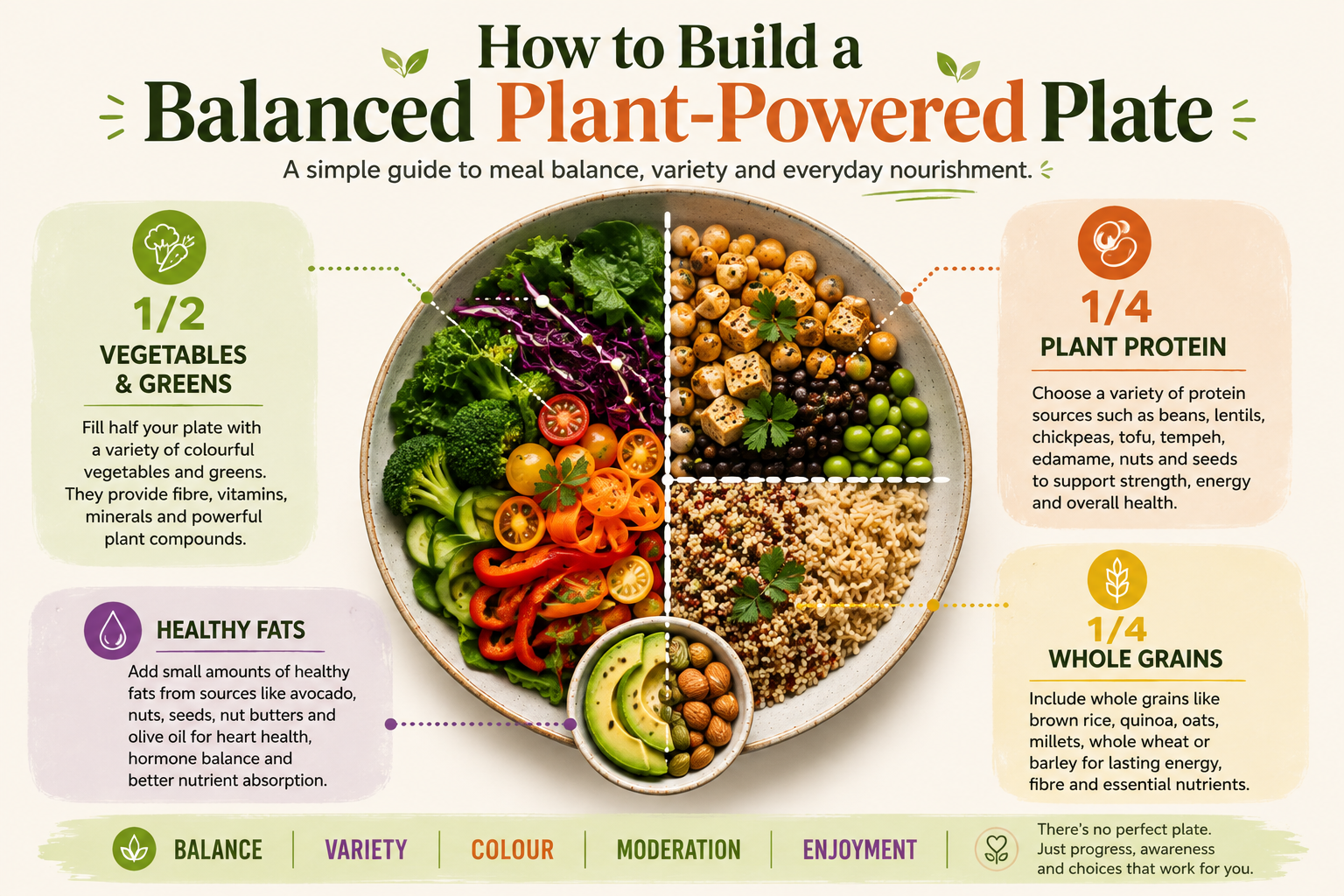
Balanced plant-powered vegetarian plate with vegetables, plant protein, whole grains and healthy fats
Start with vegetables, ideally a mix of colours and textures. Then think about protein—lentils, chickpeas, beans, tofu, paneer, yogurt or eggs, depending on what you eat.
From there, add a satisfying carbohydrate such as brown rice, oats, whole-wheat roti, quinoa or millets. A small amount of fat from nuts, seeds, avocado or cooking oil rounds things out.
For example, a simple dinner might be dal, brown rice, sautéed spinach, roasted carrots and a spoonful of yogurt. Another could be a quinoa bowl with chickpeas, roasted vegetables, avocado, seeds and a lemon-herb dressing.
The idea is to have options, not rules.
Eat the Rainbow for More Variety
Colour isn’t just about making a meal look appealing. Different plant foods contain different combinations of vitamins, minerals, fibre and naturally occurring plant compounds.
Try adding a little variety throughout the week:
Green: spinach, broccoli, peas, beans and leafy greens
Red: tomatoes, red peppers and watermelon
Orange: carrots, pumpkin and sweet potatoes
Purple: beetroot, purple cabbage, aubergine and berries
Yellow: corn, yellow peppers and bananas
You don’t need every colour on one plate. Simply changing your vegetables and fruits from day to day is an easy way to bring more variety into your diet.
Delicious Plant-Powered Breakfast Ideas
Breakfast doesn’t have to be elaborate.
A bowl of oats can become a satisfying meal with fruit, yogurt, nuts and seeds. Besan chilla with vegetables offers another savoury option, especially when served with yogurt or chutney. Whole-grain toast topped with avocado, tomatoes and seeds can work well when you’re short on time.
For something lighter, try fruit with Greek yogurt or curd, along with a handful of nuts or seeds.
On busy mornings, the breakfast you’ll make regularly is usually more useful than an elaborate recipe that looks great on paper.
Nourishing Lunch Ideas
Lunch is a great opportunity to build a complete meal in one bowl.
Try combining quinoa or brown rice with chickpeas, cucumber, tomatoes, leafy greens and a simple lemon dressing. For an Indian-inspired option, pair dal with brown rice or roti and two vegetable dishes.
You can also turn leftovers into something completely different. Yesterday’s roasted vegetables can become the filling for a whole-wheat wrap. Extra chickpeas can be added to a salad. Leftover dal can be served with vegetables and a fresh side salad.
A little planning can make healthy eating feel much less like extra work.
Colourful Dinner Ideas
Dinner can follow the same basic formula without becoming repetitive.
A tofu and vegetable stir-fry served with brown rice brings together protein, vegetables and carbohydrates in one simple meal. Vegetable khichdi can offer a comforting combination of grains, lentils and vegetables. A chickpea or bean curry with roti and a side of greens is another satisfying option.
Don’t be afraid of flavour. Garlic, ginger, cumin, turmeric, chilli, coriander, lemon, fresh herbs and spice blends can transform simple ingredients.
Healthy food doesn’t have to taste bland.
Build Your Own Plant-Powered Bowl
You don’t always need a recipe to make a good vegetarian meal.
Instead, think of a bowl as a few building blocks you can mix and match.
Choose a protein: chickpeas, lentils, beans, tofu, paneer or yogurt.
Choose a grain or carbohydrate: quinoa, brown rice, millet, whole-wheat roti or sweet potato.
Add two or three vegetables: perhaps broccoli, carrots, spinach, cucumber or roasted peppers.
Add some healthy fat: avocado, pumpkin seeds, sesame seeds, walnuts or a dressing made with tahini or another suitable ingredient.
Finish with flavour: lemon juice, fresh herbs, chutney, yogurt, spices or a homemade dressing.
This approach is particularly useful when you’re cooking for different tastes. Everyone can build a bowl using the ingredients they enjoy.
Don’t Forget Vegetarian Sources of Protein
Protein deserves a place in a balanced vegetarian diet because it contributes to the maintenance of muscles and many other functions in the body.
Fortunately, there are plenty of options. Lentils, chickpeas, kidney beans, peas, tofu, tempeh, dairy foods, paneer, yogurt, nuts and seeds can all contribute protein to your meals. Eggs can also be included if they fit your vegetarian eating pattern.
Rather than relying on one “perfect” protein food, aim for variety across the week.
If you’re following a strictly vegan diet, or have specific nutritional needs, it can also be helpful to discuss nutrients such as vitamin B12 with a qualified healthcare professional or dietitian.
Make Plant-Powered Eating Practical
A vibrant vegetarian lifestyle doesn’t require cooking complicated meals every day.
Keep a few useful staples available: cooked lentils or beans, whole grains, frozen vegetables, fresh leafy greens, nuts, seeds and simple sauces or spices. Preparing one grain and one protein source ahead of time can give you a starting point for several meals.
And leave room for convenience. Frozen vegetables, canned beans and simple supermarket ingredients can absolutely have a place in a balanced diet.
The goal is consistency, not perfection.
A More Enjoyable Way to Eat
A plant-powered vegetarian lifestyle doesn’t have to be complicated. You can enjoy plenty of variety while still building meals that feel balanced and satisfying.
Start with foods you already enjoy. Add more variety gradually. Try a new vegetable, grain, bean or recipe when you’re curious. Keep familiar meals in rotation, and adapt them to suit your preferences, culture, budget and schedule.
There isn’t one perfect vegetarian plate for everyone. What matters is finding combinations that nourish you, taste good and fit comfortably into your everyday life.
In the end, sustainable eating is usually pretty simple: eat food you enjoy, give yourself plenty of variety, and find an approach that fits your actual life.