
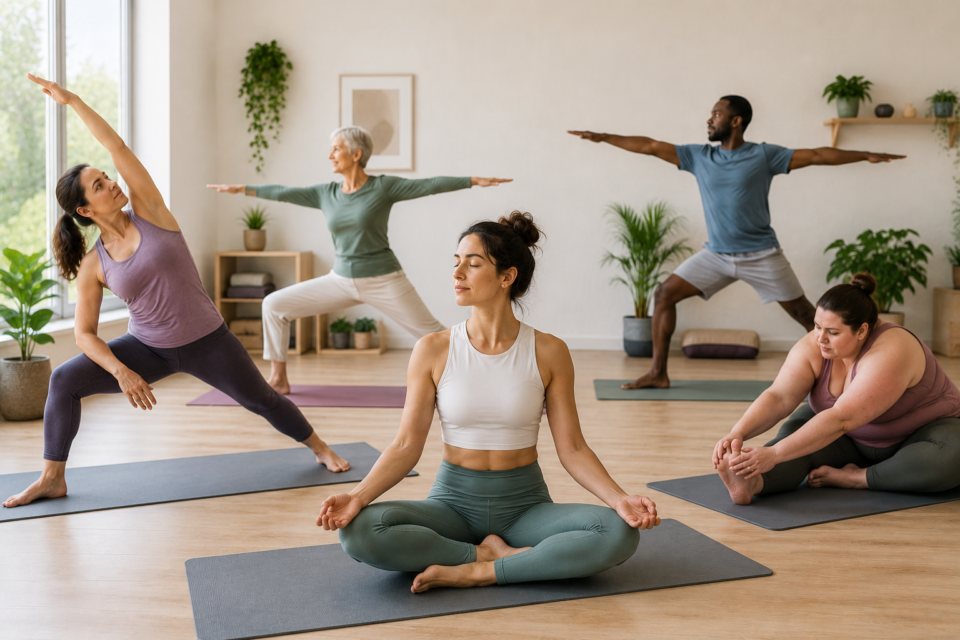
Yoga can look very different from one class to another. One session might involve slow, steady poses and plenty of breathing, while another moves continuously from one position to the next. Some practices are physically demanding; others are designed around relaxation and stillness.
That variety is one of yoga’s strengths. You don’t have to be flexible, athletic or experienced to begin. The key is finding a style that fits your current needs rather than assuming there is one “right” way to practice.
What Are the Different Types of Yoga?
The different types of yoga vary mainly in pace, intensity, movement, breathwork and how long poses are held. Popular styles include Hatha, Vinyasa, Yin and Restorative yoga, along with more vigorous practices such as Ashtanga and Power yoga.
For beginners, slower classes can provide more time to learn basic movements and become familiar with breathing and body awareness. But “beginner-friendly” doesn’t mean one style will suit everyone. Your goals, energy level and comfort matter too.
Hatha Yoga: A Steady Place to Start
Hatha yoga is often a good introduction to physical yoga. In modern class settings, Hatha generally involves individual poses held for several breaths, with an emphasis on learning the movements rather than rushing between them.
A Hatha class may appeal to you if you want to:
- Learn foundational poses
- Improve body awareness and balance
- Work on strength and flexibility gradually
- Practice at a comfortable pace
Because class descriptions can vary between studios and instructors, it’s worth checking the expected pace before booking.
Vinyasa Yoga: Movement With the Breath
Vinyasa, sometimes called flow yoga, connects poses into a continuous sequence, usually coordinating movement with breathing. It can be more dynamic than a typical Hatha class, although the intensity varies considerably.
This style may suit people who enjoy movement and variety. A slower flow class can be approachable for newer practitioners, while faster classes may feel more physically challenging.
If you’re completely new to yoga, look for a class specifically labelled “beginner” or “slow flow” rather than assuming every Vinyasa class will have the same difficulty.
Yin Yoga: Slower and More Reflective
Yin yoga takes a very different approach. Instead of moving quickly through many poses, practitioners generally stay in floor-based positions for several minutes at a time.
The slower pace can create space for quiet, focused breathing and reflection. Yin can also challenge you in a different way from an active yoga class: remaining still and paying attention to physical sensations requires patience.
Because longer-held positions can feel intense even when the class is slow, comfort matters more than trying to push deeper into a stretch.
Restorative Yoga: Making Space for Rest
Restorative yoga is designed around relaxation. Props such as blankets, cushions, bolsters or blocks can support the body while poses are held for longer periods.
Rather than treating yoga as another demanding workout, restorative practice gives you permission to slow down.
It can be particularly appealing if your main goal is to unwind, practise gentle movement or create a calmer transition at the end of a busy day.
Power and Ashtanga Yoga: More Physical Challenge
Some yoga styles are considerably more vigorous.
Power yoga generally emphasizes strength and continuous movement, while Ashtanga follows a structured sequence and can be physically demanding. These practices may appeal to people who enjoy challenging workouts and already have some familiarity with yoga.
That doesn’t make them “better” than gentler practices. A demanding class is useful when it matches your goals and experience; a restorative session may be more appropriate when your body needs recovery.
How Yoga Can Support the Mind and Body
Yoga combines physical movement with breathing and awareness. Regular practice may support flexibility, strength, balance and body awareness, while the slower, mindful elements can also help with relaxation and stress management.
The benefits don’t have to come from an intense session. A short, comfortable practice can still give you an opportunity to move, breathe deliberately and pay attention to how you feel.
That mind-body connection is perhaps one of the most useful aspects of yoga. Instead of focusing only on how much you can stretch or how advanced a pose looks, yoga encourages you to notice what your body needs today.
How to Choose the Right Yoga Style
Start with your goal rather than the name of the class.
| If you want… | Consider… |
| A gentle introduction | Hatha or restorative |
| More continuous movement | Vinyasa or slow flow |
| Stillness and longer-held poses | Yin |
| A stronger physical challenge | Power or Ashtanga |
| Relaxation and recovery | Restorative |
These are starting points, not rules. Class intensity can vary significantly between teachers and studios, even when two classes have the same name.
If you’re new, tell the instructor. A good teacher can explain modifications and help you understand what to expect. Starting with a beginner or gentle class can also make the learning process more comfortable.
Most importantly, don’t judge your yoga practice by how a pose looks. Using a prop, changing a position or taking a rest isn’t failing at yoga. It’s part of learning how to work with your own body.
Yoga Doesn’t Have to Look One Particular Way
There is no single yoga practice that works for every person, and that’s exactly the point.
You might enjoy an energetic Vinyasa class one week and need a quiet restorative session the next. Someone else may prefer Hatha every time. Your preferred practice can change with your experience, schedule, energy and goals.
Yoga becomes more accessible when you stop treating flexibility or advanced poses as the destination. The practice can simply be a way to move, breathe, focus and reconnect with yourself.
If you have an injury, a health condition, are pregnant, or have other concerns about physical activity, consider getting appropriate professional guidance and let your yoga instructor know before class.
The best type of yoga is ultimately the one you can practise comfortably and consistently—and that leaves you feeling better connected to your body rather than pressured to perform.